Showing posts with label sri lanka fiction. Show all posts

Wednesday, June 13, 2012

Cry for Me a Little: Stories of the Souls by Mariam Riza.


 Its been a long time since I wrote in this blog and its not for lack of reading material, its just that I took a long break from Sri Lankan books. The Gratiaen Prize was last month and Madhubashini Ratnayake won this year but we will have to wait for at most a year until the book is published so that we can see if it is worthy or not a la Shehan Karunatilleke, Vivimarie, Ruwanthie de Chickera etc. But I have in my hands a Gratiaen shortlist from this year. At the shortlist reading at the British Council, the reader of Mariam Riza's work was so amazing that he made it a strong contender for the prize, yet now having read the whole book, I realize he could have read any of the other candidates and made them equally strong.
Mariam Riza has a lot to say and she says it bluntly. No censoring of language or situations, she addresses a multitude of situations - conflict, trafficking, drug testing on animals, and poaching are just a few. The book also traverses the globe - stories on Rwanda, South Africa, and Saudi Arabia and of course Sri Lanka are some of the countries. So it presents itself as being a sophisticated collection for the world reader.
Written in a style that is typically Sri Lankan (sloppy writing, bad grammar, wierd punctuation and capitalization) she addresses topics that are usually shunned in Sri Lankan books in a manner that is in your face. It is a style that might have worked had the author paid a little attention to details that make a book well written and above average. Having said that, I have to imagine that the Gratiaen shortlisted the book more on content and subject matter than writing style.
Most of the stories start well but then end up going nowhere or in a direction I personally did not want them to go to. The story read at the Gratiaen shortlist was titled The Smell of Roses. The direct and blunt rantings of a male gigolo peters out to become a love struck teenage like obsession that has no bite. A story titled Wrongful Imprisonment which flirts with the theme of prisoners in Guantanomo is so weakly written that you wonder what kind of President of a country has such a nincompoop working for him. After reading several stories that dealt with serious themes but failed to deliver, I began to wonder why the author would write about these topics if she didn't make the effort to ensure that the reader was moved not only by the subject matter but also by the writing.
The stories are undeniably powerful and deal with themes that are current, political, social and humanitarian but for me, the experience of reading it was frustrating with the turns and twists that some stories took that rendered them inane, and bad; and unrealistic dialogue that was featured in other stories that made them unbelievable and soppy. To cap it all off the cover, perhaps to reflect the depressing title was shaded grey depicting something I could not quite decipher so I could not even take a break from the writing to gaze at the cover and get inspired.
Mariam Riza has talent but she needs to hone it. As it is a first book a lot can be forgiven but I shall look forward to her second book and hope that it will be a lot better.

Tuesday, September 20, 2011

Chilli Chicks and Heart Attacks by Sanjaya Senanayake


Its Book Fair time again and off I went trotting to the BMICH the first day. Man, was it crowded? More people there for the scene than the books me thinks, but no matter I knew what I was there for. I headed to my favourite once a Book Fair year stop - the PH book stall and picked up my loot. So know that the next few reviews are going to be my haul.
This book is fairly new - last year I believe and to be honest, the cover caught my eye (Yes, yes, I am shallow and judge all books by their covers). I was a bit thrown at the beginning and didn't know who the author was until I started reading the book. But my aunt (yes we have an incestuous reading relationship) who I gave the book to, bless her soul, was confused and kept thinking that Sanjaya Senanayake was the grandson of Dr Manjula Mendis and that the story was all true. She is still reading the book and I have to assure her from time to time the story is all lies :)
Well this book is a riot and a hoot. I haven't read much humourous stuff written by Sri Lankans and while I loved Colpetty People which was hilarious then Ashok Ferrey degenerated into mocking rather than funny. I think with the war and all, we were wallowing in depth and conflict and sorrow and all that downer stuff. So perhaps its just good timing that this book which is totally irreverent, funny, sexy, (well there is a lot of sex) and plain ol fun reading came out when it did. This book will not win any prizes, it is just too flippant and unserious for that, but is definitely worth a read.
So now let me stop waffling and get on with the book. Dr Manjula Mendis has just graduated as a doctor and begins his internship at the prestigious St Ivanhoe Hospital in Australia? Not sure about the country but it is Oz or the US. Anyway, his very traditional and Sri Lankan parents want him to settle down and find a good Sri Lankan girl and so after boasting about their son, they spend the rest of their time looking for the perfect match. Dr Mendis has a foul mouthed sister who makes appearences throughout the book to either complicate his life or to inject some xxx rated words into the text. She is funny but perhaps the most unreal character for me. His colleagues are all wierd in some way or the other with even wierder names (that too was not a favourite for me). Then you have the film star Salma Cruz(Hayek and Penelope combo?) who lives in his imagination spicing up his sex life and his dreams.
The book is full of interesting medical titbits that always border on the insanely wierd, there is adventure, spice, mystery, competition, and at last happiness. It is after I finished the book that some of the names began to make sense to me! Perhaps you will get it faster. I'll let you read it and find out what I mean. Anyway, it's nice to see Sri Lankan writers getting into humour, a much needed category and it is a fabulous holiday read.

Friday, October 29, 2010

Mythil's Secret by Prashani Rambukwella


When I was young I read the usual things starting with Enid Blyton, then Harry Potter, Lemony Snicket etc etc. Basically I didnt read any Sri Lankan authors as a child. Heck! I didn't even read Indian authors. So when I picked up Mythil's Secret at the book fair for my neice, I intended to do a quick read and then give it to her, and guess what? I am getting another one for her, this one is mine. OK, so I loved the book and yes its a children's book but it is intelligent, it respects the child and therefore it is a cute read for adults as well. Mythil's Secret is about yakas and a little boy who realises he has the gift of seeing them. Prashani Rambukwella didn't write a sweet idyllic all is well with the world story for children, what she did was to create a world that balances real life (fighting parents and worries about money) with the fantasy world of the yakas. OK, so there are good yakas and bad yakas, there are strong yakas and weak yakas, there is a bahirawaya who is cool to die! There are yakas who impersonate humans and then there is Mythil. The unlikely hero, who is an only child who worries obsessively about his parents fighting and is aware of their money problems. Such a welcome relief from the spoilt brats you generally see around (take a look at my neice's classmates!) One holiday when Mythil is dumped at his Aachie's who lives in a village near a little forest, he realises that he can see into another world. Thus begins the adventure. Soon Mythil is seeing everyone as a yaka. The beauty of this story, though perhaps its only adults who may realise it, is that it could be that Mythil because of his family problems is retreating into a fantasy world. Even his parents think so and thus enters a child psychologist to counsel Mythil. But Mythil is suspicious of her, she could be a yaka, her friends could be yakas, who can he trust. The nice thing about this book is that it is a book that any child can relate to. Ok, so I am not the horrible aunt you think I am, I did give my neice her book and asked her what she thought. Her verbal skills are not that advanced as her aunt's obviously because she said it was "Cool!" For me 'cool' is good. It means that she didnt wrinkle her nose and go: "What a lame book, how goday." Then she tells me that some of her other friends from other schools (not her posh school mind you) are doing Mythil's secret as a school text. Hurrah! If only we had such interesting school texts I might have paid attention. Right now, I cannot remember a single school text that I did. Just goes to show. Anyway, Mythil's Secret in my books is a winner - and of course how could I forget, it did win the Gratiaen early this year. So even other people thought so.

Wednesday, September 22, 2010

Arathi by Nihal de Silva


Nihal de Silva writes his best book and then dies before finishing it. Readers will know that I am not a Nihal de Silva fan. I couldn't understand for the life of me why people were raving about The Road from Elephant Pass ( for me it was a romantic drivel that was too politically correct, completely unrealistic, badly written and an excuse for a little ornithological walk in the park). Ginirella while having a good premise was so badly written that I couldn't finish it. And then comes Arathi. What a book! The narrative shifts between the reality of a young hip advertising executive who purchases a used computer and discovers secret files within files. He manages to crack the code and read the content of the files. The book is presented with alternating chapters of the present and the past (which reveal the diary of a man involved in the gun running trade). They come to a head when the LTTE and crooked officers in the armed forces are both on the hunt for the computer, some stolen money stashed away, a young girl (Arathi) who may hold the key, and the young executive who finds himself in a situation way over his head. All the ingredients for a stunning thriller.

The prose is brutal - terse, tense, holding back no punches, Nihal has successfully infiltrated the mind of a young man who enters an unfamiliar world. Reading it in one go, from start to finish over a weekend the futileness of his death is rammed home continuously. You cannot escape it. Having appeared to have done his homework Nihal recreates a very realistic scenario set during the CFA. With not one reference to wild life he takes us on a fast paced urban journey of the hunter and the hunted. If there were any slip-ups it was that he used the outdated name for Dharmapala Mawatha (I had to ask someone where this Turret Road was?) which was the only indication to me (if I was not aware of his background) that he was someone of an older generation. His hero also used the term 'darling' a bit too liberally with almost everyone. Glossing over the actual part where hero and heroine fall in love (it seems to happen almost instantaneously and without choice) he does a fairly realistic portrayal of a young man in love. The darn book finishes at a crucial point. Vijitha Yapa has issued a challenge for someone to finish the story but to my mind I just cannot think of how it could possibly end. Possibly the only person who could do it would be David Blacker (author of A Cause Untrue). I do hope he takes up the challenge. As you know I am a sucker for covers and this one just does not do the book justice. It is washed out and boring. The way the book is designed is also confusing as there are hardly any breaks to indicate time jumps and situation changes. But those lapses are forgiven because the story line is so good. It was tiresome to give bad book reviews one after the other, so I am so glad that this Book fair purchase was utterly and totally worth it!


Saturday, September 18, 2010

Unplugged Quarter by Vihanga Perera


Oh it is the beginning of the Book Fair and I have already got away with stacks and stacks of books. I will certainly go back again middle of the week to stock up even more. This year it was kind of messy with stalls not in their usual places and me getting annoyed with having to deal with the rain and the mud and the crowds who seem to come for other reasons other than books. The long walk from the parking lot was enough to deter even the most die hard book lover but it is an event that I just do not miss. Call me a total boring bookworm but I honestly get goose bumps from being in a place that has all these books. Book fair - Rock on!

In one of the comments to a previous blog entry (The Prince), someone recommended Vihanga Perera's Unplugged Quarter. As I had reviewed a previous book of his ( Stable Horses, in May 2009) I thought it might be interesting to review his newest book. In a previous review I read of this book by someone whose name I cannot quite remember (a foreign girl I think) the reviewer compared Vihanga Perera to Aristophanes. Yep, she did! And I was quite surprised. Aristophanes after all is a very big deal. After reading this book, I think she got it wrong. Vihanga is no Aristophanes, instead he is closer perhaps to James Joyce in his word play and combinations.

Unplugged Quarter is certainly a more mature book than Stable Horses. If I remember right, I just didn't like Stable Horses. This book is different. There is a story line of some sort. The writing except for some instances is mostly smooth. It stays amusing.

Very quickly, the story concerns the Head of the Department (written throughout the book like that which after being funny became annoying) Vahanya Bertolt (!!!! her parents must have hated her) referred to as Bertolt Breast by the uni students and her live in uncle Bheem. They both live in a collapsing house. It would not be a Vihanga Perera book if there was no reference to the university system and university students. So they duly appear. Peradeniya university and English Honours students: Sri, Manishka, Poornaka, Nipunika, Kesha Godapola and a student constantly referred to as Sucked Cock - Nishadi Denagama; then there is a failed guitarist Nayana who is related to the Head of the Department and who is in hiding from some sordid escapade with a young girl in Negombo. I believe those are the main characters. A series of sub characters enter and exit throughout the book. There is a chapter entitled Aeschylus or Euripides where two university professors go head to head in a poetic encounter. Does this actually happen in the University of Peradeniya? If it does kudos to them, because it told me of the existence of a vibrant artistic culture that I did not know existed. Perhaps the English lit graduates of our university system have quite a different experience from those in other departments.Earlier in the book there is a discussion of Nihal de Silva's The Road from Elephant Pass by the students. I for one will agree with them in their interpretation. I seem to be the exception to the rule and really didn't like the way the book was written and couldn't believe that people fell hook line and sinker for the pc drivel! But that is another review.

Anyway back to the book - I actually didn't have a big problem with this book. True the writing is uneven. True, Vihanga Perera has flashes of brilliance, and wittiness and true talent but it peters out all too fast. There are nice references to ideas, music, situations and wicked and sarcastic asides. Vihanga's strength is that he conveys student life so accurately. Unlike Chucking the Dragon, the very names, the very language, the very attitude smack of authenticity and doesn't seem to be written just for the sake of a good read. Don't get me wrong, I loved the Dragon, but it didn't feel quite authentic.

All this leads me to believe that eventually Vihanga Perera will produce the great Sri Lankan novel - well I certainly won't be surprised if he does so, but does he have to inflict his journey towards it on us. I have decided that I must be a masochist as I keep on reading his work. Therefore, perhaps it would be wise for me not to review Vihanga Perera's future work until I read the great Sri Lankan novel that he shows promise of writing.


Wednesday, July 21, 2010

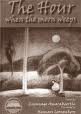
The Hour when the moon weeps by Liyanage Amarakeerthi, translated by Kumari Goonesekere


When you read a translation, and you don't like the book, you never know if its bad due to the translation or if the book is simply bad. My book crazy aunt had spoken so highly of Liyanage Amarakeerthi that I was quite excited when I got my hands on The Hour when the moon weeps. But the book did not live up to my expectations and I am not sure why. It is my gut feeling that the translator has not done the book justice and when I see that it won the HAI Goonetilleke Prize for best translation, I am doubly dissapointed. There are six short stories, it is a fairly slim book. Perhaps the trouble is with me, for when reading I was either bored or I just could not understand the stories. For example, a story titled Black Pokuta and Red Pokuta totally confused me. The story jumped time lines and tenses and in the end I was not sure between reality and imagination. Perhaps that was the author's intention, if so, then he succeeded.


I read this book as an indication of the state of contemporary Sinhala fiction writing. Perhaps I wanted to read stories that were modern and cutting edge and spoke of the dilemmas and lives of present day youth. Instead, what I got was traditional village scenes, of bathing beauties and thwarted love. The story I liked the best was the title story: it conveyed albeit disjointedly (but perhaps that is the writers style) the internal battle of a hardened criminal who aches for revenge.


Does a book lose something in translation? My personal opinion is that translation is not the word for word translating of a book but it should convey the sense, spirit, humour, darkness and joy that a book may hold. My feeling of Amarakeerthi's book is that the translator did a word for word translation which resulted in an awkward, clumsy rendition of what could have been a good book. Perhaps it is the lack of good translators that does not allow works from our three languages to cross into each other's worlds. I would be most interested to hear if there are other good translations of works from Sinhala or Tamil.


Sunday, May 30, 2010

The Whirlwind by Ayathurai Santhan

First I shall grouse about the Grataien. It is really irritating not to be able to read the shortlisted works and sometimes not even to be able to read the winning works until a year has passed. So this year there were three manuscripts and two books and of course last year's winner got published just in time as well. I have yet to pick up copies of the two winners - this year and last year, but my aunt who went for the Gratiaen picked this book up for me.

I didn't go for either the shortlisting or the award night but the literary chatter was that there was this interesting book written by a writer from Jaffna about the time the IPKF was stationed there. In fact, I thought at the time, that this might have been a sure winner. Then I read the book and straight off, I will tell you if it had won, I would have been dissapointed.

In my opinion a prize winning book has to stand out. While this book actually had what could have been a gripping story, the writing style left much to be desired and I was not even sure that it should have been shortlisted.

The story is set over a very short period of time. Perhaps over a few days. When the IPKF came as so called peace monitors to the North of the Island, they saw all the people there as Sri Lankans - an identity the Northerners had erased from their psyche and they saw all Tamils as potential LTTErs. Concentrating on one village that has all the people rounded up and housed in one compound that had one toilet for around 400 people, the people are confused if they are there for their safety or being detained. The depiction of the Indian army is sketchy and not drawn out yet it does not turn out to be a weakness of the book, for the slim novel in fact concentrates on the relationships, hardships and fears that the Northern Tamil families were going through during a period that they hoped would save them and yet became another kind of horror for them.

When you read this book, you feel for our people and what they have had to go through. They are mere pawns that are toyed with all players - the LTTE, the Sri Lankan army, the Indian army. Ayathurai Santhan is careful not to tread on the ideology of the average Northern Tamil person. He shows all these people as victims, being tossed from one side to the other at the whim of whoever rules. It might have been interesting if he had taken a stance, for after all the LTTE could not have existed and been successful for so long, without popular support in the area. The book ends without resolution.

The writing is replete with Sri Lankan English of the lesser kind: akward, clumsy and sometimes grammatically incorrect. Now, I hope I don't get flak for this comment. For example: "Though everyday, Sivan had passed by this house often, this was the second time he happened to be inside." Is a sentence written in the way Sri Lankan's typically speak. And there is nothing wrong with that if it was written as direct speech.

My final comments is that this is a book that I highly recommend only because there is a dearth of writing in English about the conflict from the Tamil perspective. I admit that it is written in a sometimes crude and akward manner, that the story could have been fleshed out better, that as it is, it is not a very strong book. But it is important that all Sri Lankans be able to read about our history, and what better way to do it, than through fiction, the different voices and perspectives of our history - be it good or evil. I applaud Ayathurai Santhan for taking the courage and writing such a book. I just wish it had been edited much more and we would have a stronger perhaps even a prize winning book. I look forward to more books written from varying perspectives, perhaps one that is sympathetic to the LTTE cause for we need to know how part of our own people wished to secede from the country in the hope for a life of equality, justice and peace.

Sunday, January 10, 2010

A Calf in Milk and Milk Chocolate by Jagath Kumarasinghe


First let me wish all of you a Happy New Year. Let's hope that 2010 will hold a bright future not only for us but for the country as well.

Sometimes, I wish that I hadn't restricted this blog to only Sri Lankan books. For instance I read Michelle de Kretser's book The Lost Dog, towards the end of last year (she is coming to the Galle Literary Festival this year, I hear). I couldn't understand head or tail why reviewers thought it was such a great book. For me, it was boring, obscure and totally self-indulgent. But as she is not a Sri Lankan author, I can't review her book and must content myself with these few snide remarks!

So off I went to read a truly Sri Lankan author and happily my mother had bought Gratiaen winner Jagatha Kumarasinghe's latest book, A Calf in Milk and Milk Chocolate - isn't that a great title? Even if you never read the book, the title will make you lick your lips. So I took it off to my holiday destination to read in peace and tranquillity. What a mistake!

Jagath is a truly unintelligible writer, for me at least, and all things being relative, I could be very wrong. The stories claim to be advertisements in spiritual realism. Unfortunately, it sounds that if you want to be spiritual you have to be incomprehensible as well. The ten stories are liberally sprinkled with Bible quotes and sound as if they are going to be portentous. Instead they seem to ramble on and on using fairly bizarre language that makes the reader exhausted in a few minutes.

I generally hate reviews that copy chunks out of books, but just in case you haven't read the book this will give you an idea of what I am talking about. For instance, what do you make of the following passage -

"I myself am erected. Even men get themselves erected and that would lead them to beget and I myself am erected on this sprawling grounds, which is quite hilly. Yeah four things say not it is enough; The grave: and the barren womb; The earth that is not filed (sic) with water And the fire that saith Not, it is enough ...The sprawling grounds on which I am erected has many a grave, and on this ground I witness the nature of a barren womb and the nature of fire which is kindling within my belly that never satisfies. The Sinhalese use a nice word for hunger - Badagini - it denotes about the very nature in the belly when the fire within the belly gets roaring you need food to sacrifice for the fire. And I have a chimney which is running upwards and which adds zigzagging curly smoke to the sky where heaven is. ( The Barren Womb Grounds)"
Whoa! Now that is a mouthful. And a complex and confused mouthful to me. The whole book is peppered with such passages full of spelling mistakes and grammar mistakes disguised as philosophy. It is such a perplexing read that you are not sure if the writer intends the mistakes and perhaps they are not mistakes or are they real mistakes. Who knows?

Jagath's first book Kider Chetty Street which won the Gratiaen Prize some years ago was also full of this adhoc English but at least it was sweet. But I take this opportunity to question the judges for I believe they were single-handedly responsible for all sorts of drivel to be written up as Sri Lankan English. When in fact Sri Lankan English is merely English that is written reflecting the way it is spoken and written in Sri Lanka. Jagath is by no stretch of imagination our local James Joyce if that was the implication of the judges.

This latest book of his is neither sweet nor accessible nor does it make sense to me. But who knows perhaps it is a gem for other readers.

I am sorry, I hate giving bad reviews and wished I could give it a better review. But maybe it's just me. Perhaps others will love the book. Let me know.


Wednesday, October 14, 2009

That Deep Silence by Punyakante Wijenaike


My grandmother says that one of her favorite books of all time is Giraya by Punyakante Wijenaike. To be honest, I am not one for these old time stories, so I haven’t read it and somehow don’t feel like reading it yet. Perhaps one day.
Wijenaike is a prolific writer. This is her sixteenth publication in her writing life. She has won many prestigious awards, among them the State Literary award; she has been a Commonwealth Prize winner and a Gratiaen Prize winner. When ones hears this about an author, there is a certain expectation that needs to be met. And it was with this expectation that I took That Deep Silence to read.
To be frank Wijenaike is not my kind of author. Her themes can be seen as hack and overdone to the hilt. But when reading this book, I felt it was seeped in sadness, nostalgia and mourning and it is that which I will talk about. There is pathos in Wijenaike’s writing. It is a remembrance of times past – when all was good and well. However, instead of Wijenaike conveying that by retelling the stories of the good old days, she dwells on the horror stories of today. It is her focusing on the negative of modern life that forces you to realize that the past was glorious. Perhaps that is her technique. For instance, there is very little to be happy about in this book. All is doom and gloom. Is this what the conflict has done to at least one literary creator? Possibly.
Most of Wijenaike’s characters are middle or lower class members of society – some of them used to belong to the landed gentry but have now been reduced to virtual poverty. There is a lack of feeling between children and parents, there is a lack of communication and camaraderie between husbands and wives, there is plenty of conflict, abandonment, abuse, and murder.
Her war stories are trite – a soldiers widow, a child soldier. They have all been done before, in much the same manner. There is nothing different or exceptional in these stories. There are stories of sexual repression, that may have been apt in another era, and a story that deals with homosexuality in an uncomfortable manner. I am not sure of it being that relevant in today’s world with that impact. The story of cancer is stereotypical. Some of the stories like Living for the Day, seem to be inspired from newspaper reports and most of her stories remind me of those you find in the papers, in the creative writing section.
Wijenaike’s poetry is more from the heart, than being well crafted. They seem to be semi ramblings again on the themes of loss, sadness, displacement, conflict, death. The poetry comes out as being a genuine concern for what is happening to the country as well as the society. And yet, in her poetry, she is able to break out of her depression and write about a butterfly, an ominous rain cloud, which is a welcome respite from the heavy atmosphere she has created.
The whole book is like one big cry for help. It is in a sense as if Wijenaike, who is more at home writing fiction like Giraya, has through her desperation on the state of the country written this straight from her heart. How good it is, depends on how the reader takes it. If it is taken in the spirit that I think it is written in – an inability to stand by and watch as the world of the writer collapses, then that’s fine. However, if the reader expects writing of an excellent quality and is thus disappointed and unable to see the message of the writer, then more’s the pity.
Wijenaike’s nicest story is No grass for my feet. An account of growing up in the 1930s and onwards. Perhaps it is based on her life. If that is so, I hope her next book is her autobiography. It will be a book worth reading but I hope she can drop her ‘all is misery’ style and write the account as it is – sadness, happiness, hope and despair. After all a life is not just one emotion, it has its fair share of all. What we must remember is that after sadness, joy does come. I hope Wijenaike remembers that too.

Tuesday, July 21, 2009

Wedding Gifts and Other Presents by Asitha Ameresekere


It’s funny that apparently short stories in the West do not do well. Publishers evidently are loathe to publish a first time author’s collection of short stories and prefer to launch him with a novel and then publish the short story collection. And yet, when I think of Jumpha Lahiri and Rohinton Mistry, they burst onto the literary scene with short story collections. And then followed up with novels. So, I don’t know, perhaps my impression is wrong.
Maybe, Asitha Ameresekere would not have got an audience in a western publishing house but here in Sri Lanka the short story rules. Lucky for us, for that allowed Ameresekere to get published here. If you are looking for short stories written in a typically Sri Lankan style, then this is not the book for you. Born and brought up in England, the only thing Sri Lankan about Ameresekere is his name and ok perhaps the way he looks. (At the Galle Literary Festival, he was compared to Abishek Bachaan! – a bit of a stretch to the imagination, I think.) Anyway, here is a book written with understated humour, wit, impeccable style and language.
This slim collection has twelve stories that zip up and down a strange universe. The first story deals with Sri Lanka and ever after that the country or its citizens are never again mentioned. I sometime wonder if Ameresekere threw in the token Lankan story to appeal to those here for you can see his heart lies elsewhere. It must be admitted that the story set in Sri Lanka is the most awkward and despite its setting is also not typical of Sri Lankan short stories. But never mind, it was entertaining if implausible.
My all time favourite story is the Shame of the Pig, a strange love story if any, but so beautifully written and so imaginatively told, that I feel Ameresekere shines here as a short story writer. The elements are all there: the language, the plot, the craft, the depiction.
Some stories are immensely short, and others are perhaps unnecessarily long. I had the impression of reading through twelve short short films and so I was not surprised to learn that Ameresekere is primarily a film maker. It shows in his stories. You can see the story rather than be simply reading it.
In reading this collection, I kept on wondering how many Sri Lankans would find it appealing. Then, I had to remind myself that I am a Sri Lankan and I find it appealing, and I can’t be that unique, so perhaps there are others out there who liked the book. I would be interested in getting feedback on this point.
I will admit that I think his stories to a Sri Lankan reader may be slightly odd. They may not be easily understood but that is not a bad thing. Literature can be many things at once.
I wonder if Ameresekere will be a popular read in Sri Lanka. If I can predict something, I will say no. He is too international, not slapstick funny, too sophisticated for the general local reading public.
After reading Ameresekere’s collection, I began to wonder why the short story was so popular in Sri Lanka. Most Lankan writers find it easier to start with writing short stories. A quick research on the web, gives me that: A short story is like prose fiction but more intense and compact than a novel or a novella. In the twentieth century for the first time, the short story didn’t have to revolve around a plot and very often readers claimed that nothing ever happens in the short story. Ameresekere’s stories are written so beautifully that it takes you a while to realize there is not much of a plot. It is more a feel of time and place.
In ending I have to mention my weakness for covers – and this cover is simply beautiful!

Tuesday, June 9, 2009

Colombo Streets by Thisuri Wanniarachchi


A recent trend in Sri Lanka is to start writing books at a young age. A few years ago, a fourteen year old boy wrote a thriller. It was well written if somewhat gruesome and disconcerting from one so young. The latest book in this trend is from a fifteen year old school girl. Colombo Streets, has a catchy title and a distinctive cover. The production of the book is good and inviting to the casual reader. And after seeing the launch in the newspaper I was intrigued and picked the book up. But I was soon to decide that if there is any reason to ban children from writing books, this is it.
After having read the book, and expressed my displeasure to my friends, I honestly had no intention of reviewing the book, as I thought this blog had dealt too much with bad writing and was looking around for a good book of Sri Lankan literature. But after reading the interview that Thisuri Wanniarachchi gave to the Nation newspaper, I felt that I had to write a review on both her interview and her book.
First the interview: She claims that she doesn’t like to read much and she hates reading. She implies that reading is a waste of her time and she may as well spend that time writing. Here is a piece of advice: You can’t be a good writer, unless you are a good reader. She has the audacity to admit that she has a weak vocabulary because she doesn’t read much and that people have called her writing style ‘simple’. She is under a misconception. Her writing style is not simple, it is simply bad.
Her interview goes on to say much more that is silly and trite and I wont dwell much more on that. Now onto the book.
The gist of the book is as follows: A young Tamil girl from Kilinochchi is adopted at the age of ten by a Sinhala grandmother who lives in Colombo. Favoured by the grandmother, cheekily called J- Lo, her Sinhalese adopted sister Sarah feels jealous of Indeevari. Sarah, a champion swimmer begins to feel ill and to everyone’s shock and disappointment she is diagnosed with cancer. She moves to Singapore for treatment and after some time she is sent back to Sri Lanka with no hope for recovery. Eventually, after being introduced to a charismatic Buddhist priest she is healed.
It should have been a feel good book but it wasn’t. Why was this?
According to Thisuri’s interview the ultimate message of the book apparently is to leave people with cancer a message of hope. But there were so many other messages found in the book that reduced her primary message. For instance, there were many complicated situations that needed to be handled delicately – the issue of displacement, cancer, ethnic conflict, generation gap, adoption etc. The book seemed to breeze through not tackling any issue with the sensitivity and delicacy that was warranted. In fact, the book almost trivialized all the issues it dealt with.
Unevenly handled, the book glosses over Indeevari’s situation of displacement, conflict, and adoption. The book also handled the subject of cancer carelessly, which is a disservice to those stricken with cancer and who know first hand what it is to go through a serious illness.
I would like to end on a positive note, therefore I would say that Thisuri’s use of language was modern and young and reflective of the age of the narrator.
A word of advice to indulgent parents: Encourage your children to read first, buy them books, rather than publish their book. They will thank you for it, when they are ready to write their novel as adults.

Sunday, May 10, 2009

Stable Horses by Vihanga Perera


According to C.S. Kaushalyan, the protagonist in the novel Stable Horses, the Salalihini Sandeshaya nor the Hansa Sandeshaya are epic poems. Consider his statement in Vihanga Perera’s new Gratiaen shortlisted novel: “To say the least, none of the Lankan writers had ever – ever - versed in epic formats.” But perhaps he didn’t know of our epic poems existence and for that he could be forgiven in making such a broad statement. But I do hope that statement is not a reflection of Vihanga Perera’s personal opinion.
Just weeks after the Gratiaen Prize shortlist, I picked up a copy of the book.
The very first sentence, the very first paragraph was unfortunately replete with akwardness, missing articles, spelling mistakes, grammar mistakes that are so numerous, they cannot be listed. The sentence construction of the whole novel was also clumsy and graceless but that could be a particular style and I could get used to it, if it was consistent. Think Animal’s People by Indra Sinha or Londonstani by Gautam Malkani. The point was that it wasn’t. Even though the blurb at the back says: “It is the story of his entering a literary competition. With the necessity of winning. With the urge to rhyme it to the top.” The novel itself other than for the introduction is nothing about the literary competition but rather about the complexities of life and growing up.
Perhaps Vihanga Perera is writing for an uber intelligent reader. And that I confess, I am not. For us average readers, this book was confusing in the chapter arrangement, confusing in the presentation of ideas, confusing in the use of language, confusing in the theme. I admit that it was a tough read for me. The book begins with informing the reader the book is to be submitted to the prestigious GoldenFoot prize. Everybody and their grandmother knows that this is a reference to the Gratiaen Prize. Ok, so the judges may have had a little giggle at that ‘clever’ reference. Then the ‘novel’ but it really is a series of interconnected short stories, with pompous and vague titles, stumbles through a series of themes: A young man working unhappily in an advertising agency, arranges to meet a young woman later that day. We are then taken into a chapter that delves on an attempt at writing poetry or song, I am not sure which. To tell you the truth it is not that good. But perhaps that is point the author is trying to depict. Then there is a little aside about saving drowning ants in the loo, a little pseudo- philosophizing and then we are moved abruptly onto a lover’s parting. Perhaps one of the better chapters. After that a school teachers funeral, a rambling on the last year of school, and then onto another good chapter on rejection at love again. Then more bad trite chapters and a good chapter. It goes on and on.
Oh dear! I am rather upset. Here I am, an amateur reviewer who has not read the winning submission at the Gratiaen and is reviewing now the second Gratiaen shortlist and its not going well either, I am beginning to wonder if something is wrong with me! Perhaps I cannot appreciate good writing by our good Sri Lankan authors. It must be me because the alternative thought that the Gratiaen judges could be wrong, is too disturbing.
What really bugs me about this book, is that the author spent a few weekends in his newspaper column complaining about the difference between Sri Lankan English and Standard English and then I find that this book is nothing but Sri Lankan English and written badly at that!
Don’t get me wrong Vihanga Perera has potential. His writing has moments of being funny, clever, witty, etc but to get there you have to wade through numerous hours of pure rubbish. So in the end, I don’t think its worth it at all. At this rate, I have to take back my previous review on the Gratiaen shortlist and say that Anthea was much better! Trite, but much better.

Thursday, April 23, 2009

The Mango Tree by Anthea Senaratna

When the Gratiaen shortlist was announced and I noticed this book among the six, I went out and bought it. Dressed with a nice attractive cover which is also quirky, Anthea Seneratna presents the reader with 16 stories in 121 pages. I read the book in one evening as it is a very easy read. I found some of the titles of the stories rather intriguing: Two Pieces of Chicken; Wednesdays and Weekends; Shut –ins; Rainburst etc.
Let me digress for a moment to set the stage before I comment on the book per se. Imagine yourself driving down Arnold Coomaraswamy Mawatha on the weekends, looking at the paintings hung all along the park boundary. Imagine yourself evaluating the paintings. While there are some extremely talented artists to be discovered here, most of them are pleasant, entertaining, nicely done but absolutely ordinary. They have talent but it is like a drawing room talent – certainly not art gallery talent.
When a book is shortlisted for the Gratiaen, you expect it to be art gallery talent not drawing room talent. Unfortunately, The Mango Tree while sweet and nice and pleasant and nicely written with good English and no grammatical errors, is eventually a mediocre book. It is definitely drawing room talent.
Now onto the stories:
It’s amazing how many middle class writers are obsessed about the poor, the underprivileged, the seamy side of life. A life that they know nothing of, can hope to know nothing of and they certainly would not want to know anything of and it shows in their writing. I call it the guilty middle class woman syndrome. So they will write about poor illtreated housewives, they write about soldiers injured in the war and unable to fit into ‘normal’ life. They write about unhappy women, unhappy situations far removed from their own experience.
For a book to grip you, to hold you spellbound, there has to be an element of truth and reality in it. Good writers, and I am not talking about great writers, but merely good writers have that ability of taking you through the most mundane of situations but holding you spellbound. When Arthur Golden wrote Memoirs of a Geisha, I am sure most readers completely forgot the writer was not a geisha, not a woman, not a Japanese. In Sri Lanka we have a few writers who can do this, but not many. Among the younger writer’s however, I can see a different breed who write about what they know, in their own style, and that makes all the difference.
For the first time since I started this blog, I am stuck. I do not quite know how to finish this review. I am not sure if I can say any more. But I will try. For a light read, this is certainly a good book. The English is good, the grammar is correct, some stories are amusing. The ones that stand out for me are: Tuition Class, Freedom Bound. Some stories had no point or were an indulgence for the writer. Perhaps if it hadn’t been shortlisted for the Gratiaen Prize I might have been kinder. But because it was, and because I expected so much more, in all fairness to those who read, I cannot. However, I hasten to add, that I am sure there will be many people who will read this book and like it. It may sell well, and I do hope so. But in the end, in my opinion the book is a self indulgent exercise that has been offered to the public as literature.

Thursday, March 5, 2009

Theravada Man by Manuka Wijesinghe


After having read Manuka Wijesinghe’s first book Monsoons and Potholes which I enjoyed very much even though it was repetitive and a bit of a difficult read, I approached her second book just released early this year, with some trepidation. The launch of the book at Barefoot in Galle at the wonderful Galle Literary Festival was well done, even though the attendance was poor. The skit performed by the extremely talented Indu Dharmasena, Sangvada, Michael Meyler (who knew the man could act as well) and Manuka was hilarious. In half an hour they had reduced this 359 page book into a complete story. Quite a feat!
To my utter surprise the book read well. The story flowed on and on and most important of all kept the reader’s interest. The central figure the Theravada schoolteacher who was referred throughout the whole book as iskolemahaththaya is looking for a wife. Hooked up with an astrologer, they engage in various philosophical discussions that cover all aspects of life until they reach the desired object – the wife. Once married, the schoolteacher’s wife referred to as iskolehamine, as she is also a teacher, produces a number of children, replaces the astrologer as the recepient of various philosophical discussions, and discovers close to the end that she has been nothing but merely a goal post in the iskolemaththaya’s life. There are various kavi’s that are interspersed in the text that even though I read them diligently were rather distractive. Other than for historical documentation, reproducing the kavis in whole did not add more to the novel. In addition the novel has two playlets that they call nadagamas, which while entertaining to read, again was not essential to the story. I fear that both were included because they could not be published anywhere else.
Not having met Manuka personally but heard her speak briefly, I suspect that the book is written the way Manuka speaks. The book is rather breathless as it speeds its way through from beginning to end. There are many interesting philosophical discussions on the way but it almost seems that the book is secondary, and that the writer is using it as a way of transmitting her critique on life and philosophy to the world at large. Sometimes the reader feels battered. Sometimes the reader feels lost. Sometimes the reader feels it could have been said in many more words less.
But the final word is that on the whole it was an entertaining book. Typical of her previous writing there is a cause, but it is less pressing, less intense. I preferred Monsoons and Potholes because it came from the soul. But Theravada Man is better written, more slick and it is only right at the very end, that you ask. And what was all that about?