Showing posts with label translation. Show all posts

Thursday, September 8, 2011

Metta by Sunethra Rajakarunanayake


If all of you thought I had upped and gone, 'tis not so! I took a long break from reading books by Sri Lankan authors, so thank you for all the messages and inquires, and yep, I am still here.
A few days ago, my trusty aunt thrust this book into my hands and as I am always curious about what's happening in the Sinhala literature scene, grabbed it and read it.
What a book! I had not heard of Sunethra Rajakarunanayake (quite a mouthful, that last name) but when I googled her she seems to have published many books and won quite a few awards. The story is set in modern times - unlike English writing by Sri Lankans, the vernacular novels have moved far from the waluwa, oppressed labourers and exploitative landlords. A young woman Varnasi, an enigmatic man called Sasha, a mother and grandmother are the main characters. Sasha who once courted the mother is now with the daughter. Hmmm quite a love triangle there isnt it? I cant think of a single Sri Lankan novel in English that dares to deal with this kind of scenario. The daughter Varnasi, ignorant of her mother and Sasha's relationship refuses to listen to her mother's advice to stay away from Sasha. Sunethra R does not shy away from controversial and contemporary issues. Illicit pregnancy, female headed households, working mothers, and a country in conflict are themes that run through the novel.
If there is a criticism against the novel is that the portrayal of men is totally inadequate. Sasha seems to be the only man portrayed wholly and yet his portrayal is of a completely flawed man. The novel starts off well with Sasha's point of view but then he is reduced to a caricature only to be revealed to us through Varnasi and her mother. We never hear Sasha's point of view again and that is a pity. Also it could have done with a whole load of editing. The novel was unnecessarily too long and dragged on, weighting it down. The mother and daugter had similar voices and you could almost think it was the Author's views that were coming through both. While they were interesting and compelling characters it might have been nice to have diverse views especially when it came to expounding Buddhist philosophy. The book felt slightly preachy on a Buddhistic note. I had to do a double take when Varnasi talks about loving Sasha like a child instead of a lover and thought it was a bit sick! But then again maybe that is the ultimate love. And perhaps the author was juxtaposing carnal love with selfless love. All in all the book was a good read and I liked it.
But ... If I have a reservation at all about this book it is for the translation.
Many of the books that I read are translations and I never for a moment think that I am reading a translation. Isabel Allende, Umberto Eco, Marquez, Parmuk, Peter Hoeg and the list goes on and on. In those books the story flows, the English is natural and there is no theses at the beginning and end of the book. Sadly, Metta struggles only because of the translation, it is a testament to Sunethra R's story that you plow through the book regardless of the clumsy and heavy translation. It might be worthwhile for future translators to study how other authors like those mentioned above, all the Russian authors, even Coelho are translated without the reader being aware even once it was written in a language other than English.
It is my personal opinion that we have a long way to go in good translation but don't let it deter you from reading this book.

Wednesday, July 21, 2010

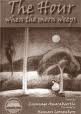
The Hour when the moon weeps by Liyanage Amarakeerthi, translated by Kumari Goonesekere


When you read a translation, and you don't like the book, you never know if its bad due to the translation or if the book is simply bad. My book crazy aunt had spoken so highly of Liyanage Amarakeerthi that I was quite excited when I got my hands on The Hour when the moon weeps. But the book did not live up to my expectations and I am not sure why. It is my gut feeling that the translator has not done the book justice and when I see that it won the HAI Goonetilleke Prize for best translation, I am doubly dissapointed. There are six short stories, it is a fairly slim book. Perhaps the trouble is with me, for when reading I was either bored or I just could not understand the stories. For example, a story titled Black Pokuta and Red Pokuta totally confused me. The story jumped time lines and tenses and in the end I was not sure between reality and imagination. Perhaps that was the author's intention, if so, then he succeeded.


I read this book as an indication of the state of contemporary Sinhala fiction writing. Perhaps I wanted to read stories that were modern and cutting edge and spoke of the dilemmas and lives of present day youth. Instead, what I got was traditional village scenes, of bathing beauties and thwarted love. The story I liked the best was the title story: it conveyed albeit disjointedly (but perhaps that is the writers style) the internal battle of a hardened criminal who aches for revenge.


Does a book lose something in translation? My personal opinion is that translation is not the word for word translating of a book but it should convey the sense, spirit, humour, darkness and joy that a book may hold. My feeling of Amarakeerthi's book is that the translator did a word for word translation which resulted in an awkward, clumsy rendition of what could have been a good book. Perhaps it is the lack of good translators that does not allow works from our three languages to cross into each other's worlds. I would be most interested to hear if there are other good translations of works from Sinhala or Tamil.


Thursday, August 20, 2009

Uprooted by Martin Wickremesinghe


Translated by Lakshmi de Silva and Ranga Wickramasinghe.

I didn’t know this book existed until I read that the Hi book club was featuring the book. So of course though I wouldn’t be caught dead at the book club, I trotted off to get the book. So my first complaint is that it should have had much more publicity than it got. My second complaint is what’s with the cover? Its godawful! Certainly not one to encourage a reader to pick up. Boring covers will turn off readers. So I wish they had taken the trouble to give me a nice bright cover.
Having studied in English, and my Sinhala being shaky and all, I had not read any of Martin Wick’s work. while I was growing up. It was only recently that I read Madol Duwa, in translation. I had heard about Martin Wicks, and they seem to make a big deal of him and all that, and the literati think that he is the greatest of any of our writers, so I was keen to read him. Therefore, a thank you is in order for those who made it possible for me to read this. And a message that I would like to see more translations of our Sinhala and Tamil writers out there.
Now onto the book. Firstly the translation cannot be faulted. It was wonderful to read such a beautifully translated book. I remember the awful translation of Madol Duwa, that ruined a good book for me. Translation is an art and the combination of Lakshmi de Silva and Ranga Wickramasinghe (a relative of the authors?) gave the novel an authentic feel. They obviously know their subject and author well and that is the key to good translations.
I really liked this novel. Is it a different story? Is it told in a unique manner? No and not quite are the answers. It is a sweet story, nicely told. But to me not gripping. Perhaps I am jaded by my twentyfirst century outlook. So I tried to put myself in the place of a reader of 1944. My grandmother was ten years old, my grandfather was twenty years old. Perhaps he would have read the book, but honestly my ten year old grandmother should have managed the book as well. It is simply written, the language is not innovative or beautiful, but it was written well. Was this a startling story of the time? Not really, I should think. If it was startling at all, I suppose it was the fact that children, young people and adults of that time were reading stories of Western heroes and heroines and here at last was a story for the Sinhala people. But wait a minute, this was written in Sinhala, so it was a different audience that Martin Wicks was writing for. He was writing for the Sinhala reading man and woman and child. This is a story that I feel they could have very well lived. A traditional family living through changing times, fallen fortunes, upwardly mobile young men and impoverished genteel women looking for security through marriage.
In the introduction, I am told that the novel is an imported art form. So perhaps that is why Martin Wick’s is so lauded, it is because he introduced to the Sinhala reader a mode of reading and therefore thinking through the form of written story telling.
For me some of the behaviour of the characters were not in keeping with their character, for instance, I was not sure why Nanda’s mother, who initially was so vehemently opposed to Piyal marrying Nanda would even encourage her second marriage to him. In my experience of the older generation, they are loathe to forgive and change and would carry grievances and tradition to the nth degree. Was Martin Wick’s like modern Hindi films trying to show the Sinhala society how they should behave, as opposed to how they actually behave. Who knows?
Today, when Sri Lankan literature especially in English is having a period of revival, it would have been lovely to have had the opportunity to meet Mr Martin Wicks, have him featured at the GLF, but alas! I believe he is no more.
While I was reading the book, I couldn’t help but make comparisons. Martin Wick’s published this book in 1944, Ulysess by James Joyce in 1922;The Great Gatsby by Fitzgerald in 1925; Gone with the Wind by Margeret Mitchell in 1936; 1984 by George Orwell in 1949; Lolita was published in 1955. My critics (and there are so many, as we discovered when I reviewed Colombo Streets) may say these writers wrote in English, they had an advantage. So let’s take a look at some non-English writers of the same period and what they were writing. Maxim Gorky had already died by 1936, as had Lorca who was assassinated in August 1936 by Franco’s nationalists. Rabindranath Tagore won the Nobel Prize for Gitanjali in 1913; Herman Hesse published Sidhdhartha in 1922. In 1928 Ting Ling had published Miss Sophie’s diary about the sexual fantasies of a Chinese woman infatuated with a young man; In 1929, Rilke published Letter to a Young Poet; Astrid Lingren wrote Pippi Longstocking in 1945, Solzhenitsyn published One day in the Life of Ivan Denisovich in 1962. I have heard of every single one of these writers and read their writing (with the exception of Ting Ling, but was intrigued when I read about her and her writing, so had to include it, to strengthen my case). So what is the point you may ask?
While I liked Martin Wick’s Uprooted a lot. I don’t think it comes close in quality of writing or subject matter to any of the works I have cited above. If these writers many of them Martin Wick’s contemporaries were writing such edgy, thought provoking, socially relevant commentaries, how is it that Uprooted in my opinion doesn’t compare.
This is just my opinion, I am sure that many out there, will jump to the defense of Martin Wick’s and quite justifiably so. But we have to be realistic. We are a small country that is yet to produce a world standard of anything from anyone who has lived in this country. I had to add the disclaimer or else I would be inundated by examples of Sri Lankan born writers living out of the country. That doesn’t cut it for me. Martin Wick’s is a good writer but is he a great writer? Is he Sri Lanka’s greatest writer from the twentieth century? If yes, then I am disappointed. But to end on a good note. I await the translations of the second and third books of the trilogy with eagerness. Truly, I can’t wait to read them.