Sunday, September 12, 2010

Tea and Me by Chanima Wijebandara


As reviews of poetry books have been requested, off I trotted over to my neighbourhood bookshop to see the pickings. Tea and me by Chanima Wijebandara caught my eye. Firstly I love the yellow bookcover and secondly because the book was slim, I thought I could read it quickly and review it before the week is up. Divided into three parts - we begin with a poem that cries out at the injustice of society when one is a woman. While there were some awkward parts, you cannot deny the poem was written straight from the heart and that is what makes it appealing. There is undeniably a strong feminist streak that runs through most of the poems. While some poems are mawkish in their depiction of love, there are others that are strong and vibrant. For example a favourite poem is

The New "pound of Flesh"

The sophisticated modern man
who saved me
from the stereotypical tragedy,
took my heart,
took my hand
and soared to unknown heights,
emancipated
and glorified the
unconventional woman in me,
after six years and a half
now wants
three children
three meals
and six cups of tea a day
from me
to continue!

Is there a new Vivimarie in the making? Other poems are Cocktail - an amusing description of the hollow and brief encounters at what else but a cocktail party; File Delayed - makes one think on what is important in life and that have been missed amidst the pressures of work; Marriage - is a startlingly good poem that reveals the facade of a violent marriage. One of the things I loved about Vivimarie's poetry is how she took everyday events and highlighted the mundane or particular social issues in a few lines. Chanima seems to closely follow in Vivimarie's footsteps. She has passion and there is outrage. Two things that can fuel the writing of good poetry. However, I feel that she needs to mature in her writing. Undoubtedly, Chanima Wijebandara has talent. She has important things to say about life and love and social issues. Tea and me for a first attempt at writing poetry is commendable but it has room for improvement. Like the title, I will await Chanima's second publication and hope that she has let it steep and brew awhile before it goes to press.
On another note, the Colombo Book Fair starts in a few days time. Oh Goody! You can bet that I will be there stocking up on books to do more reviews on. See ya there!

Tuesday, August 3, 2010

Stitch Your Eyelids Shut by Vivimarie VanderPoorten


Like I have said before, I am not a poetry person, but since I picked up her first book Nothing Prepares You, I have been a huge fan of Vivimarie VanderPoorten and was looking forward to her second book of poetry. Stitch your eyelids shut, the title taken from Pablo Neruda's poem Ode to Sadness gives us many poems that deal with disturbing themes, sadness, lost loves, conflict and emotions among other themes.


Perhaps there may be those readers who will feel inundated by this weight of sorrow. But Vivimarie continues to be one of Sri Lanka's foremost contemporary poets, detailing every day life with such accuracy that one is surprised to read of an ordinary emotion told in an extraordinary way.


There are many poems that deal with love, most of them lost. A particularly poignant love poem is Aftertaste:


still


wet on my lips


we are divided by


the blue wide sheets


of the crumpled ocean


and I have stopped waiting


on this side


of the beach's over bright bedroom


yet still I want


to write for you


even though I have kissed another man since


and filled


the empty


The poems I like best in this collection have to do with family. Grandmother Died, My Sister's fish, Letter to my sister, December 1995. Some poems are different and interesting like Quiz and Random Questions, though I have the feeling Random Questions is a nod of appreciation to Malinda Seniviratne's Gratiaen shortlisted manuscript of poems that had a whole host of question poems.


Having won the Gratiaen for her first book of poems leads me to the question is this book as good if not better than her first. Unfortunately, the answer for me is a no (and this is an entirely subjective opinion). Her first book was sassy and sharp. I found some of the poems in this collection tedious, others were laboured but let me hasten to add that most of the poems were good - in fact they were more than good, and that is what makes this collection worth having.

Wednesday, July 21, 2010

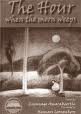
The Hour when the moon weeps by Liyanage Amarakeerthi, translated by Kumari Goonesekere


When you read a translation, and you don't like the book, you never know if its bad due to the translation or if the book is simply bad. My book crazy aunt had spoken so highly of Liyanage Amarakeerthi that I was quite excited when I got my hands on The Hour when the moon weeps. But the book did not live up to my expectations and I am not sure why. It is my gut feeling that the translator has not done the book justice and when I see that it won the HAI Goonetilleke Prize for best translation, I am doubly dissapointed. There are six short stories, it is a fairly slim book. Perhaps the trouble is with me, for when reading I was either bored or I just could not understand the stories. For example, a story titled Black Pokuta and Red Pokuta totally confused me. The story jumped time lines and tenses and in the end I was not sure between reality and imagination. Perhaps that was the author's intention, if so, then he succeeded.


I read this book as an indication of the state of contemporary Sinhala fiction writing. Perhaps I wanted to read stories that were modern and cutting edge and spoke of the dilemmas and lives of present day youth. Instead, what I got was traditional village scenes, of bathing beauties and thwarted love. The story I liked the best was the title story: it conveyed albeit disjointedly (but perhaps that is the writers style) the internal battle of a hardened criminal who aches for revenge.


Does a book lose something in translation? My personal opinion is that translation is not the word for word translating of a book but it should convey the sense, spirit, humour, darkness and joy that a book may hold. My feeling of Amarakeerthi's book is that the translator did a word for word translation which resulted in an awkward, clumsy rendition of what could have been a good book. Perhaps it is the lack of good translators that does not allow works from our three languages to cross into each other's worlds. I would be most interested to hear if there are other good translations of works from Sinhala or Tamil.


Tuesday, July 6, 2010

Chucking the Dragon by Mark Wilde


Whoa! What a book. Firstly, I just love the whole design of the book. Secondly, Mark Wilde has kickass taste in music. Thirdly, this is some attention grabbing story.


A problem I have with some Sri Lankan books is that they have a nice story but they are told so badly that it ruins it for the reader. The story in Chucking the Dragon is not pretty: a young man who is preparing to attend the University of Colombo finds himself hooked on heroin. The son of privileged but somewhat indifferent parents, he ends up doing anything and everything to get money for his drug habit. In the West such stories are a dime a dozen, but here in Sri Lanka this is a first. And though many not want to think so, this could be the story of many young people today.


Written as an autobiography Mark Wilde takes you on a wild and bumpy journey that covers almost everything sordid - from being a rent boy, to drug overdoses, to painful withdrawel symptoms when Wilde wants to kick the habit - the reader is spared nothing. Wilde reflects the typical young arrogant university student attitude of having an opinion on everything, living life on the edge and hellbent on the road to disaster. The writing is edgy and sometimes x-rated, it pushes the boundaries of Sri Lankan English writing which I like. And let me hasten to add that I do not say because Wilde uses four letter words that his writing pushes the boundaries. I say it because his sentences trip on the tongue like a drug induced monologue. For much of the novel, Wilde stays in character.


Now what is this story about. Chucking the Dragon, is Wilde's tortured tale of kicking the heroin habit. Hence the title, with the dragon referring to heroin. But it begins when he is still an addict, with only other addicts as friends, having lost the love of his life, and at his first year at university. At uni he feels a misfit, so while other students are talking of careers and love affairs, he goes into the toilets to shoot up. He ends up almost dropping out but yet with minimal studying he does better than the regular students. Is Mark Wilde saying something about the standard of university education? Eventually, Wilde disillusioned with his life, decides to kick the habit by going cold turkey in a beach shack down south. However, after almost a year of being clean and renewing old friendships and lovers Wilde contemplates going back on the habit.


This is one of my must read books. If I have a criticism it is that some things didn't ring true. The title page says Mark Wilde is not his real name. The guy knows very little about Colombo University life and certainly doesn't know much about the difference of middle class or privileged Sri Lankan lives. Some situations are more suited to a Western landscape than here in Sri Lanka and the writing sounds squarely American. I would not be surprised if Mark Wilde the writer turns out to be an ex-pat kid or an international school product. The fact that he emphasizes he goes to Ananda makes it wierdly out of place, but that is a minor point. This is one novel where it doesnt really matter. For to tell you the truth, this is a tale that could be anywhere. For while admittedly the sense of place is somewhat lacking in this case who cares. It is one heck of a tale.

The Gratiaen Prize in neglecting to at least shortlist this novel (I am told it was available for sale at the Gratiaen shortlist so I am presuming it was submitted) reveals itself to be narrow minded and old fashioned. Sri Lankan writing in English needs to not only talk about villages and walauwas but reflect modern Sri Lankan life as well. Chucking the Dragon is one of the most original, thought provoking books that I have read written by a Sri Lankan in a long time. If the judges had been less prudish, perhaps they may have given this book the chance it should have got.

Sunday, May 30, 2010

The Whirlwind by Ayathurai Santhan

First I shall grouse about the Grataien. It is really irritating not to be able to read the shortlisted works and sometimes not even to be able to read the winning works until a year has passed. So this year there were three manuscripts and two books and of course last year's winner got published just in time as well. I have yet to pick up copies of the two winners - this year and last year, but my aunt who went for the Gratiaen picked this book up for me.

I didn't go for either the shortlisting or the award night but the literary chatter was that there was this interesting book written by a writer from Jaffna about the time the IPKF was stationed there. In fact, I thought at the time, that this might have been a sure winner. Then I read the book and straight off, I will tell you if it had won, I would have been dissapointed.

In my opinion a prize winning book has to stand out. While this book actually had what could have been a gripping story, the writing style left much to be desired and I was not even sure that it should have been shortlisted.

The story is set over a very short period of time. Perhaps over a few days. When the IPKF came as so called peace monitors to the North of the Island, they saw all the people there as Sri Lankans - an identity the Northerners had erased from their psyche and they saw all Tamils as potential LTTErs. Concentrating on one village that has all the people rounded up and housed in one compound that had one toilet for around 400 people, the people are confused if they are there for their safety or being detained. The depiction of the Indian army is sketchy and not drawn out yet it does not turn out to be a weakness of the book, for the slim novel in fact concentrates on the relationships, hardships and fears that the Northern Tamil families were going through during a period that they hoped would save them and yet became another kind of horror for them.

When you read this book, you feel for our people and what they have had to go through. They are mere pawns that are toyed with all players - the LTTE, the Sri Lankan army, the Indian army. Ayathurai Santhan is careful not to tread on the ideology of the average Northern Tamil person. He shows all these people as victims, being tossed from one side to the other at the whim of whoever rules. It might have been interesting if he had taken a stance, for after all the LTTE could not have existed and been successful for so long, without popular support in the area. The book ends without resolution.

The writing is replete with Sri Lankan English of the lesser kind: akward, clumsy and sometimes grammatically incorrect. Now, I hope I don't get flak for this comment. For example: "Though everyday, Sivan had passed by this house often, this was the second time he happened to be inside." Is a sentence written in the way Sri Lankan's typically speak. And there is nothing wrong with that if it was written as direct speech.

My final comments is that this is a book that I highly recommend only because there is a dearth of writing in English about the conflict from the Tamil perspective. I admit that it is written in a sometimes crude and akward manner, that the story could have been fleshed out better, that as it is, it is not a very strong book. But it is important that all Sri Lankans be able to read about our history, and what better way to do it, than through fiction, the different voices and perspectives of our history - be it good or evil. I applaud Ayathurai Santhan for taking the courage and writing such a book. I just wish it had been edited much more and we would have a stronger perhaps even a prize winning book. I look forward to more books written from varying perspectives, perhaps one that is sympathetic to the LTTE cause for we need to know how part of our own people wished to secede from the country in the hope for a life of equality, justice and peace.

Thursday, May 20, 2010

The Prince by Manu Gunasena


This is a story that has been told for hundreds of years in many different ways. Yet, while it is a story that all of us know there are many who have not read it. When I picked up The Prince by Manu Gunasena I was pleasantly surprised to find that it read well and was simply told. In fact so simply that at first I was under the impression it was a book written for children.

The book starts with the dilemma of a North Indian prince who has been having confusing dreams. Living a life of decadence (dancing girls, Madeira wine, music) the young prince finds himself bored and unchallenged. He wants something but cannot quite name his want.

That is our introduction, the next chapter takes us to the very beginning of the tale - the story of the miraculous birth of the prince. The two childless wives of the king beg him to take another wife, then, the elder wife dreams of a white elephant entering her soul. Thereafter is the conception and birth of the prince followed by predictions of fame, fortune and worldly power.

The prince grows up within the palace, lacking for nothing. He is cosseted and protected and sees nothing but luxury and 'happy' things. But his search for that certain something ensures that he rebels and eventually he comes face to face with the very elements that the king wanted to protect him from: old age, sickness, death and the ascetic.

He now finds a name for his quest- the Stoic Stone and soon he leaves home as a mendicant in search of this elusive prize. Eventually after many years and many paths, he finds it. The Stoic Stone or Nirvana as we know it becomes his forever.

Many readers would have guessed that the story is about Lord Buddha, however, credit goes to Manu Gunasena for retelling this ancient tale in a straightforward yet interesting way. Admittedly many adults might find the book too simple for them but towards the end of the book, it shifts direction and becomes sharply philosophical.

The book is a very easy read with each chapter featuring a Manu Gunasena poem. This is one feature I could have done without. The poems were not very good and detracted from the tightness of the chapters. Consider one:


Betwixt life's splendour and fates' gloom

the Prince now rooted stood;

He had himself, the knowledge loomed,

sans thought spawned sorrow's brod.

Now that he had sired sorrow

His search couldn't wait the morrow,

now nothing would intrude;

To stir his will, his pledge fulfill;

Renounce the world; the truth distill.


If I have a resevation about this book, it is that he will lose his audience. If they are children by the time they get to the end of the book, they will get lost within the philosophical debate. If they are adults they might get bored before they got to the philosophical debates. But all in all it is an interesting read and a book I would recommend parents buy and read to their children. For in the end, it is a story that deserves to be told, it is a story worth knowing.


Sunday, March 7, 2010

Serendipity by Ashok Ferrey


Having read and enjoyed Ferrey's first collection of short stories Colpetty People and not enjoyed as much his second collection of short stories, The Good Little Ceylonese Girl, I was most interested to se if this good short story writer could make the transition to good novelist.


Serendipity is a bit of a ramble. Its an all over the place kind of novel. It could work. But does it, is the important question? Piyumi Segarajasingham, the unlikeable shallow promiscuous heroine leaves her discontented mother behind in London to return to Sri Lanka to deal with a personal crisis. In between she seems to have been recruited by a man named Skanda, a front man for an unnamed organisation, to do God knows what. An underqualified Pole named Marek who falls madly in love with Piyumi over a carton of guava juice finds himself 'serendipitiously' on the same plane as her going to teach at an International School in Colombo. A lesbian activist Deb, who head the badly named 'Women in Want, is in love with Piyumi. A trishaw driver named Viraj is in love first with Deb, because she is white and then settles for Piyumi because she is there. Then you have a motley assortment of other characters - Mrs Herath and her sister Mrs Fonseca (the Minister's wife). You have Mrs Fonseca's daughter whom they want to arrange a match for with Marek! Meanwhile, we are not spared the shenanigan's of Marek's mother who begins an affair with her neighbour Dennis Ridoynauth (Where on earth does he finds these names?) Suranganee the recalcitrant cook at Aunty Chelvam's (don't ask?) is young, nubile and sharp tongued. By now I am totally confused as the list of characters go on and on - the back text says over twenty!

Now, I have a problem with so many characters. They remain just so - characters as Ferrey takes neither the time nor trouble to develop any of them. They remain caricatures with clever and not so clever one liners that don't mean anything very much in the end. May she rest in pieces (after a bomb attack), Boom-fuck-a-boom-fuck-a-boom (to describe the said bomb). The Shadow Minister for Ports would actually prefer a brandy and on and on it goes. Sometimes it is too much.

Then Ferrey uses the most wierd names. I am sure he thinks he is being clever (and there is no doubt that man is clever). Mogambo International School; Lawyers Bilious and Dicey; The National Anthem is sung as: No more, No more, No more Martha-a-a; The Head master's name is Percy ffinch- Percy; the name of the cafe is Fuk-a-Luk, the name of the removal van is Truk-a-Luk. Ferrey must learn the art of restraint.


Now the book markets itself as a satire. Just what is satire? It is defined as a text or performance that uses irony, derision, or wit to expose or attack human vice, foolishness or stupidity. There is plenty of that in the book, but I am uncertain if Ferrey uses irony, or derision or wit to expose any of them. What he does use in good liberal doses is ridicule. Sometimes below the belt, sometimes viciously. I expect satire to have some depth, that unfortunately you will not find here. Though from his writing you know that Ferrey is vastly capable.


Another problem I find with Ferrey's writing is that its all the same. Which ever book you read, you will find the same phrases, same plot, same kind of characters etc. The man can certainly write but it is like a recipe that he follows all the time, every time. With Ferrey, we have a writer who sells himself short. He writes well, his writing is different, it is clean, polished and sometimes shows a glimmer of sophistication. But Ferrey thinks his readers are stupid. The story line is dummified, the cliches (by his own admission he says the book is rife with cliches) abound and I am positively sure I have read of of the same lines in his other books.


He is also sloppy in his writing. I believe there is a time lag here. The book is set in the 1980s, Piyumi Segarajsingham who was a little girl when she left the country in 1983, can no way qualify and practice as a barrister even in 1989!! unless she was a genius and there is no indication of that! Then on page 126 Ferrey slips up and calls Women in Want after the real name of the NGO he has modeled it.


There seems to be nothing too sacred for Ferrey to have included in this book: white vans, Golden Key, terrorism, class, caste, NGOs, sexuality, bomb attacks, security check points, interns, fitness freaks, gyms, elections, election posters and so on. Michelle de Kretser at the Galle Literary Festival, said that some of the things you leave out tell a story more effectively than all that you put in. Ferrey needs to listen to his inner voice more.


On the whole the book for me was a large dissapointment. Ferrey while having the talent to write unfortunately plays to the gallery. The people who buy and like his book are a reflection of the society he laughs at. But this particular book is crammed with too much and yet there is no decent story line. You don't get caught up in the character's lives- you don't laugh with them or cry with them. Instead you are supposed to laugh at them all the way, all the time. I can't do that. I get tired.